
Preserving Sight.
Restoring Vision.

Cirrus Therapeutics is leveraging ocular immunology to create transformative therapies, designed to extend ocular healthspan and redefine healthy aging for vision.

A New Era in Ocular Immunology

Cirrus Therapeutics is revolutionizing the treatment of age-related macular degeneration (AMD) with groundbreaking therapies that restore what aging takes away from our vision.


While traditional treatments chase symptoms and target single pathophysiological pathways, our pioneering research rejuvenates the eye’s defenses across multiple pathways, offering a preventative and restorative therapy with the potential to dramatically slow or even halt disease progression and reverse early signs of vision loss.


Our innovative breakthroughs could transform the lives of millions, preserving sight, extending ocular healthspan, and redefining what it means to age with clarity and dignity.

Understanding Dry AMD: The Leading Cause of Vision Loss for People Over Age 50.

Age-related macular degeneration, or AMD, is a progressive eye disease that destroys the macula, the central part of the retina responsible for sharp, detailed vision.

In its “dry” form, which affects 85-90% ¹ of AMD patients, toxic deposits called drusen accumulate beneath the retina while cells critical for vision slowly die off.

What begins as poor low-light vision and slight blurriness gradually expands into growing blind spots at the center of vision, making it impossible to read, drive, recognize faces, or perform the daily tasks that define independent living. Unlike losing peripheral vision, dry AMD steals the precise central sight we depend on.

The human toll is staggering: dry AMD affects over 200 million people ²  worldwide, with that number expected to surge to 288 million by 2040 ³ as populations age. AMD patients experience depression rates 25% higher ⁴ than their peers and face a significantly increased risk of developing dementia, a devastating cascade where vision loss accelerates cognitive decline. For millions of families, watching a loved one’s world literally shrink to peripheral shadows represents one of aging’s cruelest realities: the gradual theft of connection, independence, and joy.

Age-related macular degeneration, or AMD, is a progressive eye disease that destroys the macula, the central part of the retina responsible for sharp, detailed vision.

In its “dry” form, which affects 85-90% ¹ of AMD patients, toxic deposits called drusen accumulate beneath the retina while cells critical for vision slowly die off.

What begins as poor low-light vision and slight blurriness gradually expands into growing blind spots at the center of vision, making it impossible to read, drive, recognize faces, or perform the daily tasks that define independent living. Unlike losing peripheral vision, dry AMD steals the precise central sight we depend on.

The human toll is staggering: dry AMD affects over 200 million people ²  worldwide, with that number expected to surge to 288 million by 2040 ³ as populations age. AMD patients experience depression rates 25% higher ⁴ than their peers and face a significantly increased risk of developing dementia, a devastating cascade where vision loss accelerates cognitive decline. For millions of families, watching a loved one’s world literally shrink to peripheral shadows represents one of aging’s cruelest realities: the gradual theft of connection, independence, and joy.

Age-related macular degeneration, or AMD, is a progressive eye disease that destroys the macula, the central part of the retina responsible for sharp, detailed vision.

In its “dry” form, which affects 85-90% ¹ of AMD patients, toxic deposits called drusen accumulate beneath the retina while cells critical for vision slowly die off.

What begins as poor low-light vision and slight blurriness gradually expands into growing blind spots at the center of vision, making it impossible to read, drive, recognize faces, or perform the daily tasks that define independent living. Unlike losing peripheral vision, dry AMD steals the precise central sight we depend on.

The human toll is staggering: dry AMD affects over 200 million people ²  worldwide, with that number expected to surge to 288 million by 2040 ³ as populations age. AMD patients experience depression rates 25% higher ⁴ than their peers and face a significantly increased risk of developing dementia, a devastating cascade where vision loss accelerates cognitive decline. For millions of families, watching a loved one’s world literally shrink to peripheral shadows represents one of aging’s cruelest realities: the gradual theft of connection, independence, and joy.

Extending Ocular Healthspan Across
the Dry AMD Spectrum

Cirrus Therapeutics is building a complementary pipeline that addresses dry age-related macular degeneration (AMD) from its earliest immune dysregulation through to advanced, vision-threatening Geographic Atrophy (GA). Our lead AAV gene therapy is designed to restore IRAK-M, a key immune regulator that declines with age, to protect retinal cells before irreversible damage occurs.

Our second program, a next generation retinal pigment epithelium (RPE) cell therapy, is focused on patients whose disease has already progressed to center-involving GA. By replacing lost or dysfunctional RPE cells with fitter cells that can withstand the hostile GA environment, we aim to restore central vision in eyes where degeneration has already set in. Together, these approaches form a unified strategy: preserve vision earlier and reclaim it when it is compromised.

IRAK-M Gene Therapy

While most AMD treatments address only single pathways in this multifactorial disease, our IRAK-M gene therapy targets a central driver of AMD disease biology. Cirrus scientists identified IRAK-M as a central regulator of immune homeostasis in the eye. As people age, IRAK-M levels fall, leaving retinal cells exposed to chronic inflammation and metabolic stress that drive dry AMD. Carriers of rare variants in IRAK3, the gene encoding IRAK-M, have an increased propensity to develop AMD, further underscoring its importance in AMD risk.

Our AAV-based therapy delivers genetic instructions directly to the eye to restore IRAK-M production toward youthful levels. By rebalancing immune signaling upstream, this approach is designed to reduce harmful inflammation, normalize cellular metabolism, and protect both retinal pigment epithelium and photoreceptors from ongoing injury. Instead of targeting a single downstream pathway, we aim to stabilize multiple disease-driving pathophysiological pathways at once.

The anticipated outcome is a one-time, durable intervention for patients with earlier stages of GA and dry AMD. Our goal is to slow or halt disease progression and, in some patients, improve visual function by enhancing the cells that support sharp central vision. If successful, IRAK-M gene therapy could shift dry AMD from a chronic, deteriorating condition to a controllable disease with a markedly improved trajectory.

Replenishing IRAK-M.
Protecting RPE.

Next-Gen RPE Cell Therapy

For patients with center-involving geographic atrophy, areas of retinal pigment epithelium have already been lost, and overlying photoreceptors have impaired function. In these eyes, protection alone is not enough. Our second program focuses on replacing diseased or absent RPE with a next-generation cell therapy engineered to function and survive in the highly inflamed, metabolically stressed GA environment.

This RPE cell therapy is being developed to integrate into the diseased retina, support remaining photoreceptors, and provide the metabolic and structural support required for high-acuity central vision. By designing cells that are intrinsically fitter and more resilient, the program aims to go beyond slowing lesion growth and move toward meaningful restoration of visual function.

The anticipated outcome is a class-leading regenerative option for patients with advanced dry AMD, who currently have limited treatment options. In combination with our upstream IRAK-M gene therapy, the RPE program positions Cirrus to offer potential treatments across the full dry AMD continuum, from early immune dysregulation through to later-stage central vision loss.

Replenishing RPE.
Protecting Vision.

Our Team

Ying Kai Chan, PhD

CEO and Co-Founder

Jessica Chiang, PhD

Associate Director, Program Management

Qian Yi Lee, PhD

Senior Scientist

Sumeet Sarin, PhD

Associate Director, Program Leadership

Si Hui Tan, PhD

Director, Pipeline and Site Head, Singapore

Farhana Tukijan, PhD

Scientist

Board of Directors

Alexandra Cantley, PhD

Partner, Polaris Partners

Ying Kai Chan, PhD

CEO and Co-Founder

Andrew Dick, MD

Chief Scientific Advisor and Co-Founder

  • Professor and Head of Academic Unit of Ophthalmology, University of Bristol
  • Director and Duke Elder Chair of Ophthalmology, UCL Institute of Ophthalmology
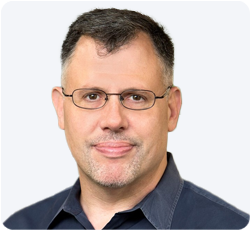
Khoo Shih, PhD

CEO, ClavystBio

Advisory Board

Emmett Cunningham, MD, PhD, MPH

Co-founder and Executive Chairman, Board of Directors, Eyconis

James Handa, MD - Cirrus Therapeutics Scientific Advisory Board

James Handa, MD

Robert Bond Welch Professor and Chief of the Retina Division, The Wilmer Eye Institute, Johns Hopkins University School of Medicine

Frank Holz, MD - Cirrus Therapeutics Scientific Advisory Board

Frank Holz, MD

Chairman and Professor, Department of Ophthalmology, The University of Bonn

Tim Kelly, MS, MBA

Chief Technology Officer, Caribou Biosciences

Brian Mansfiled, PhD - Cirrus Therapeutics Scientific Advisory Board

Brian Mansfield, PhD

Former Chief Scientific Officer, Foundation Fighting Blindness

Maritza Mcintyre, PhD - Cirrus Therapeutics Scientific Advisory Board

Maritza Mcintyre, PhD

President, Advanced Therapies Partners

Our Investors

Our Partners

News and Updates

Q&A: A Blavatnik Fellow’s Journey: Ying Kai Chan on Vision Science, Innovation, and Cirrus Therapeutics

Q&A: A Blavatnik Fellow’s Journey: Ying Kai Chan on Vision Science, Innovation, and Cirrus Therapeutics

During his time as a Blavatnik Fellow, Ying Kai Chan co-founded Cirrus Therapeutics, a company developing first-in-class and best-in-classs ocular medicines, which just recently celebrated an $11 million seed raise. We spoke with Kai about his path to HBS, the Fellowship’s role…

Cirrus Therapeutics Announces $11 million Seed Round to Advance Novel Ocular Gene Therapy Designed to Potentially Reverse Crucial Underlying Cause of Dry AMD

Cirrus Therapeutics Announces $11 million Seed Round to Advance Novel Ocular Gene Therapy Designed to Potentially Reverse Crucial Underlying Cause of Dry AMD

Cirrus Therapeutics, an ocular immunology-focused biotech, announced today the close of an $11 million seed financing to advance its pipeline of gene and cell therapies aimed at improving quality of life and extending the ocular healthspan of patients with chronic…

Exclusive: Gene therapy startup launches with $11M to tackle aging disease of the eye

Exclusive: Gene therapy startup launches with $11M to tackle aging disease of the eye

Cirrus Therapeutics has raised an $11 million seed round toward its bet that altering the immune function of the eye using gene therapy can slow or potentially stop aging-related conditions that rob people of their sight.
Uveitis in Adults: A Review

Uveitis in Adults: A Review

Uveitis is characterized by inflammation of the uvea and primarily affects adults aged 20 to 50 years. For noninfectious anterior uveitis, corticosteroid eyedrops are first-line treatment. For posterior noninfectious uveitis, disease-modifying antirheumatic drugs are first-line therapy; biologics su …

CEO Dr. Kai Chan Presents at Investing in Cures Summit 2025

CEO Dr. Kai Chan Presents at Investing in Cures Summit 2025

The Foundation Fighting Blindness and the Retinal Degeneration Fund (RD Fund) hosted their annual Investing in Cures Summit (ICS) on March 21 and 22, 2025 in Tampa to highlight the strong progress in development of treatments and cures for the…
Treating age-related macular degeneration with Drs. Kai Chan and Andrew Dick (Cirrus Therapeutics)

Treating age-related macular degeneration with Drs. Kai Chan and Andrew Dick (Cirrus Therapeutics)

The "Aging Well Podcast" is about, well...aging. It's for people of all ages who are interested in aging successfully. The topics include the Spiritual, Physical, Intellectual, Emotional, and Social dimensions of wellness as they relate to living as well and…

Cambridge startup aims at age-related eye disease with gene therapy

Cambridge startup aims at age-related eye disease with gene therapy

A Cambridge-based therapeutics company is working on a gene therapy aimed at a key protein in the eye that it says will help older adults against macular degeneration

Researchers unveil pioneering approach to combat age-related vision loss

Researchers unveil pioneering approach to combat age-related vision loss

June 5, 2024 (Cambridge, MA) – Cirrus Therapeutics, the University of Bristol, and London’s Global University Institute of Ophthalmology have discovered a revolutionary treatment for age-related macular degeneration (AMD), the leading cause of vision loss among older adults. Featured on the…

Researchers unveil pioneering approach to combat age-related vision loss

Researchers unveil pioneering approach to combat age-related vision loss

Working together towards common goals strengthens bonds among community members.
Boosting Key Protein in Eye Cells Shows Promise in preventing AMD

Boosting Key Protein in Eye Cells Shows Promise in preventing AMD

Increasing the levels of a key protein in eye cells may help protect against age-related macular degeneration (AMD), according to new research led by the University of Bristol.
Replenishing IRAK-M expression in retinal pigment epithelium attenuates outer retinal degeneration

Replenishing IRAK-M expression in retinal pigment epithelium attenuates outer retinal degeneration

Chronic inflammation is a constitutive component of many age-related diseases, including age-related macular degeneration (AMD). Here, we identified interleukin-1 receptor–associated kinase M (IRAK...

Contact Us

We’re advancing breakthrough science to preserve sight for millions. Reach out to explore collaboration,partnership, or to learn more about our work.

Cirrus Therapeutics

750 Main Street
Cambridge, MA 02139

3 Biopolis Drive, #06-11
Synapse, Singapore 138623